


Essential tips for keeping kids safe, hydrated, and sunburn-free during beach outings
Learn how to keep your kids safe, hydrated, and sunburn-free at the beach with actionable tips on packing, sunscreen application, and setting up a protective base.
TL;DR
Apply sunscreen 20 minutes before leaving home using the teaspoon rule, and reapply every two hours or immediately after swimming
Set up shade first, play second so you have a cool home base for hydration breaks and sun protection
Designate a water watcher for 15-minute shifts with no distractions, since 57% of child drowning cases involve supervision lapses
Enforce hydration every 20 minutes using phone timers, because kids absorbed in play won't notice thirst until dehydration sets in
Teach rip current response before anyone enters the water with the simple rule: float, raise your arm, drift parallel to shore
What You'll Achieve: Confident, Happy Beach Days
By the end of this tutorial, you'll have a complete system for keeping your kids safe, hydrated, and sunburn-free during family beach outings. No more frantic searches for shade when little faces turn pink. No more realising halfway through the day that nobody's had water in hours.
You'll know exactly what to pack, when to apply sunscreen, how to spot dehydration before it becomes a problem, and how to set up your beach base for maximum protection. Your success checkpoint? Kids who stay energised, comfortable, and ready to build sandcastles all afternoon, while you actually get to relax.
Before You Head Out: Your Beach Safety Checklist
Getting organised at home makes everything easier on the sand. Allow 30 minutes for packing and sunscreen application before you leave.
Sunscreen: SPF 50+ broad-spectrum, water-resistant (check expiry date)
Hydration supplies: One litre of water per person, minimum. Insulated bottles keep drinks cool longer
Shade setup: Beach tent, cabana, or large umbrella
Protective clothing: Rashies, wide-brimmed hats, sunglasses for each child
Salty snacks: Watermelon, oranges, cucumber, and crackers help replace electrolytes
First aid basics: Aloe vera gel, bandaids, antiseptic wipes
Time estimate: 15 minutes to pack if you keep a dedicated beach bag ready. The biggest blocker? Realising you're out of sunscreen at 9am on a Saturday.
Why This Approach Works
Most beach safety advice focuses on water dangers alone. But for Australian families, the combination of heat, UV exposure, and excited kids who forget to drink creates a triple threat. Approximately 39,000 children suffered swimming-related injuries requiring emergency visits during summer months in 2023 alone.
This tutorial takes a prevention-first approach. We're creating habits and systems so safety becomes automatic, not something you're scrambling to remember when everyone's already hot and cranky. Think of it as setting up your beach day for success before anyone touches the water.
Step 1: Apply Sunscreen Before Leaving Home
Action: Apply SPF 50+ sunscreen to all exposed skin 20 minutes before you walk out the door. This gives the sunscreen time to bond with skin before UV exposure begins.
Cover ears, the back of neck, tops of feet, and behind knees. These spots get missed constantly. For kids, make it a game: "Let's paint you like a ghost!"
Expected result: Visible white residue that rubs in within 5 minutes. If it disappears instantly, you haven't applied enough.
Common failure: Applying too thin a layer. Fix: Use the "teaspoon rule" from Cancer Council Australia. That's half a teaspoon for face and neck, one teaspoon per limb, one for front torso, one for back.
Step 2: Set Up Your Shade Base First

Action: Before anyone runs to the water, establish your shaded home base. Position your beach tent or cabana so it faces away from the sun's current position, giving you maximum coverage as the day progresses.
Anchor everything securely. Wind picks up without warning on Australian beaches.
Expected result: A clearly defined "cool zone" where kids know to return. Place all drinks, snacks, and towels here.
Common failure: Setting up too close to the waterline. Fix: Position at least 10 metres back from high tide mark. You don't want to relocate everything mid-morning.
Step 3: Establish the Water Watcher Rule
Action: Designate one adult as the dedicated water watcher for 15-minute shifts. This person does nothing else. No phone, no book, no chatting. Just watching.
Water safety experts emphasise this point: "We advocate for designating a water watcher, even when there's a lifeguard in place. Drowning is fast and silent." Research shows 57% of child drowning cases involved supervision lapses.
Expected result: Every adult knows exactly when they're "on duty" and when they're free to relax.
Common failure: Assuming someone else is watching. Fix: Use a physical token (hat, whistle) that the current watcher holds. When you pass it, responsibility transfers clearly.
Step 4: Create a Hydration Schedule

Action: Set a timer on your phone for every 20 minutes. When it goes off, everyone returns to base for water. No negotiations.
Kids absorbed in play genuinely don't notice thirst until they're already dehydrated. The heat and salt air accelerate fluid loss faster than you'd expect.
Expected result: Each child drinks at least 200ml per hydration break. That's about 10 good gulps.
Common failure: Kids saying "I'm not thirsty" and parents letting it slide. Fix: Make it non-negotiable. "We all drink together, every time." Pair water with a small snack to make it more appealing.
Step 5: Reapply Sunscreen Every Two Hours
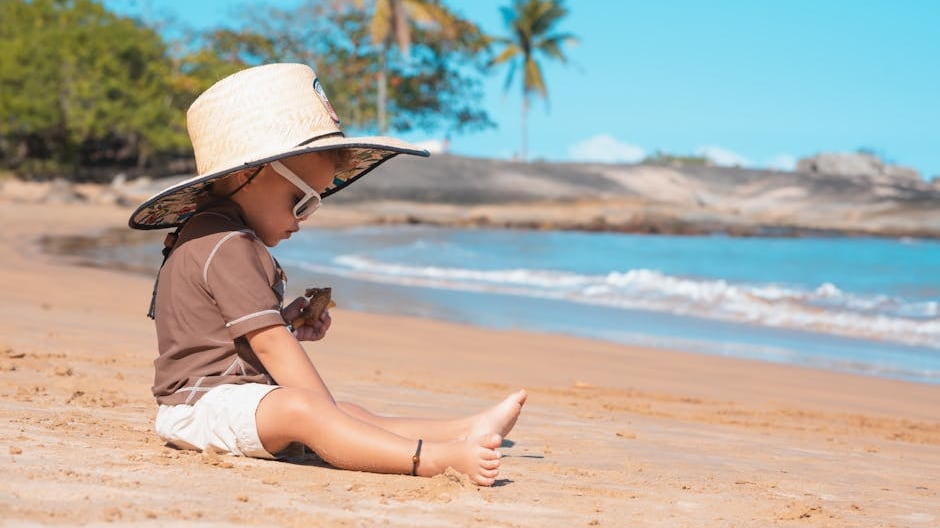
Action: Set a separate timer for sunscreen reapplication. Every two hours, or immediately after swimming, towelling off, or heavy sweating.
Water-resistant doesn't mean waterproof. After 40 minutes in the surf, protection drops significantly.
Expected result: No pink shoulders at the end of the day. Check ears and nose especially, as these burn first.
Common failure: Forgetting to reapply after kids dry off from swimming. Fix: Make sunscreen part of the "coming out of water" routine. Towel, sunscreen, then snack. Always in that order.
Step 6: Teach the Rip Current Response

Action: Before anyone enters the water, walk to the shoreline together and look for rip currents. Explain what they look like: calmer, darker water between breaking waves, often with foam moving seaward.
Teach the response: Don't fight it. Float, raise your arm, and drift parallel to shore until you're out of the current. Then swim back at an angle.
Expected result: Kids can point to where rips might form and explain what they'd do if caught.
Common failure: Assuming kids will remember verbal instructions in a panic. Fix: Practice the "float and wave" position on the sand first. Make it muscle memory.
Step 7: Rotate Between Sun and Shade

Action: Implement a 30-minute rotation. Half an hour of active play, then 15 minutes in the shade. This prevents overheating and gives natural sunscreen reapplication windows.
Use shade time for snacks, water, and rest. Bodies need recovery time, especially young ones.
Expected result: Kids maintain energy throughout the day instead of crashing hard at 2pm.
Common failure: Letting kids push through because they're "having fun." Fix: Frame shade time as preparation for more fun. "Let's recharge so we can stay longer."
Step 8: Monitor for Heat and Dehydration Warning Signs
Action: Check each child during shade breaks for these warning signs: flushed face, unusual tiredness, headache, dizziness, or reduced need to urinate.
Press a fingernail. If the pink colour takes more than two seconds to return, dehydration is setting in.
Expected result: You catch early signs before they become serious. A slightly tired kid needs water and shade. A severely dehydrated child needs medical attention.
Common failure: Mistaking heat exhaustion for normal tiredness. Fix: If a child seems "off," move them to shade immediately, apply cool wet towels to neck and wrists, and push fluids. If symptoms don't improve in 15 minutes, leave the beach.
Customising Your Beach Safety Setup
Every family is different. Here's what you might adjust:
Hydration frequency: Increase to every 15 minutes for children under 5 or on extremely hot days (above 32°C)
Sunscreen type: Zinc-based formulas for sensitive skin; spray versions for wriggly toddlers (apply to hands first, then rub on face)
Shade setup: A pop-up cabana works better than umbrellas on windy days
Water watcher shifts: Shorten to 10 minutes if you have very young children or multiple kids in the water
Must-change settings: Never skip the water watcher system. Never extend sunscreen reapplication beyond two hours. These aren't flexible.
Verifying Your Beach Safety System Works
At the end of your beach day, run through this checklist:
No sunburned skin on any family member
Kids urinated at least twice during the outing (indicates adequate hydration)
No one complained of headache or dizziness
Water watcher rotation happened without gaps
You used at least half your water supply
If you're ticking all boxes, your system is working. If not, identify which step broke down and adjust for next time.
Common Problems and How to Fix Them
"My kids won't drink plain water"
Symptom: Constant resistance at hydration breaks. Cause: Plain water feels boring compared to beach excitement. Fix: Add a splash of juice, freeze water bottles overnight so they're icy-cold, or bring coconut water as an alternative. Watermelon slices also count toward hydration.
"Sunscreen stings their eyes"
Symptom: Kids rubbing eyes, crying during application. Cause: Chemical sunscreens can irritate when mixed with sweat. Fix: Use zinc-based mineral sunscreen around eyes and forehead. It sits on skin rather than absorbing, reducing sting. Also, apply a hat with a wide brim to reduce forehead sweating.
"We can never find shade on crowded beaches"
Symptom: Arriving to find no good spots. Cause: Peak times (10am to 2pm) mean peak crowds. Fix: Arrive early or bring your own shade. A quality beach tent or cabana means you're never dependent on natural shade or tree coverage.
"My child got caught in a rip"
Symptom: Panic, exhaustion, moving further from shore despite swimming. Cause: Fighting the current instead of floating. Fix: Stay calm. Call out instructions: "Float on your back! Raise your arm!" Alert lifeguards immediately. Never enter the water yourself unless you're a trained rescuer.
"Kids refuse to leave the water for shade breaks"
Symptom: Tantrums, negotiations, ignoring calls. Cause: They're having too much fun to stop. Fix: Make shade time valuable. That's when special snacks appear. That's when they get to choose the next activity. Pair the break with something desirable.
What Comes Next
Now that you've mastered the basics of kids beach safety tips, you can build on this foundation. Consider learning basic first aid for marine stings (bluebottles are common on Australian coasts). Explore Royal Life Saving Australia's resources for age-appropriate swimming lessons.
You might also upgrade your beach setup to make safety easier. A well-designed shade system, comfortable seating that keeps you at eye level with the water, and organised storage for sunscreen and water bottles all reduce the mental load of keeping everyone protected.
The goal? Beach days that feel effortless. Where safety is built into the routine, not something you're constantly worrying about. Where you can actually sit back, feel the sand between your toes, and watch your kids make memories.
Frequently Asked Questions
What are the essential beach safety tips for kids?
The essentials come down to three areas: water supervision, sun protection, and hydration. Always designate a dedicated water watcher who does nothing but watch children near water. Apply SPF 50+ sunscreen 20 minutes before sun exposure and reapply every two hours. Ensure kids drink water every 20 minutes, even if they say they're not thirsty. Setting up a shaded home base and teaching children about rip currents rounds out your core safety approach.
Why is it important for children to wear sunscreen at the beach?
Australian UV levels are among the highest in the world, and children's skin is more sensitive to sun damage than adult skin. Sunburn in childhood significantly increases the risk of skin cancer later in life. Beyond long-term risks, sunburn causes immediate discomfort that can ruin a beach day and take days to heal. Consistent sunscreen use, combined with protective clothing and shade, creates a reliable barrier against UV damage.
How can parents ensure their children stay hydrated while at the beach?
Create a non-negotiable hydration schedule using phone timers every 20 minutes. Bring at least one litre of water per person in insulated bottles to keep drinks cool. Make hydration breaks a family activity where everyone drinks together. If kids resist plain water, add a splash of juice or bring water-rich snacks like watermelon and oranges. Watch for warning signs like flushed skin, tiredness, or reduced urination.
When should sunscreen be applied to children before going to the beach?
Apply sunscreen 20 minutes before leaving home, not when you arrive at the beach. This gives the sunscreen time to bond with skin before UV exposure begins. Use the teaspoon rule: half a teaspoon for face and neck, one teaspoon per limb, one for front torso, and one for back. Don't forget commonly missed spots like ears, back of neck, tops of feet, and behind knees.
Which signs should parents look for to identify potential dangers at the beach?
Watch for rip currents, which appear as calmer, darker water between breaking waves, often with foam moving seaward. Monitor your children for heat exhaustion signs: flushed face, unusual tiredness, headache, dizziness, or complaints of feeling unwell. Press a fingernail and watch for the pink colour to return. If it takes more than two seconds, dehydration is developing. Also note changing tide conditions and any warning flags posted by lifeguards.
How can parents teach their kids about rip currents and water safety?
Before entering the water, walk to the shoreline together and point out what rip currents look like. Explain the response clearly: don't fight it, float on your back, raise your arm to signal for help, and drift parallel to shore until out of the current. Practice the "float and wave" position on the sand first so it becomes muscle memory. Keep explanations age-appropriate but don't skip them, as even young children can learn basic safety responses.